1
ホーム

アクリルエマルジョンメーカー

アクリルエマルジョンメーカー

  • Future Development Trends of Acrylic Emulsion
    Future Development Trends of Acrylic Emulsion Jan 28, 2026
    Acrylic emulsion, as a core material in water-based coating and ink systems, has been widely recognized for its excellent transparency, gloss, film-forming properties, and environmental friendliness. Driven by global environmental policies, technological innovations, and the upgrading of downstream application demands, the product is ushering in a new stage of high-quality development. Its future trends will focus on green sustainability, functional upgrading, application expansion, and digital transformation, forming a multi-dimensional evolution pattern.   Leading the Transformation of Low-Carbon Materials Firstly, bio-based and renewable raw material substitution will accelerate. Traditional acrylic emulsions rely heavily on petroleum-based monomers, but with the pressure of carbon reduction and the development of bio-refining technology, the application of bio-based monomers is becoming a mainstream direction. International giants such as Dow have launched emulsion products using more than 30% renewable carbon sources, which have been scaled up in LEED-certified projects . In the future, the proportion of bio-based monomers in high-performance emulsions is expected to exceed 50%, significantly reducing the carbon footprint of the entire life cycle. At the same time, the development of surfactant-free emulsion systems will further eliminate the environmental risks associated with traditional APEO surfactants, meeting the strict requirements of the EU REACH regulation and Green Deal for chemical safety .   Secondly, high-solid-content and low-VOC technologies will become mainstream. With the tightening of VOC emission standards globally—for example, the US EPA has set VOC limits for coatings at ≤50 g/L, and China’s emission standards for the printing industry are gradually converging with international levels—high-solid-content acrylic emulsions (solids content ≥55%) will replace traditional products on a large scale . These emulsions not only reduce environmental pollution but also improve application efficiency by reducing drying time and energy consumption, which is particularly critical for water-based inks and overprint varnishes in the packaging and printing industry .   Thirdly, circular economy models will be widely adopted. European countries have taken the lead in promoting closed-loop recycling of emulsion raw materials, with the industry average recycling rate reaching 18.7% in 2025 . In the future, enterprises will build a full-chain circular system covering raw material recycling, waste emulsion treatment, and product remanufacturing. For example, waste emulsions from the printing industry can be degraded and reused as raw materials for low-grade emulsions, realizing resource recycling and reducing environmental pressure.   Meeting the Demands of High-End Application Scenarios As downstream industries such as packaging, electronics, and automotive continue to upgrade, the performance requirements for acrylic emulsions are becoming more refined and specialized. Functional upgrading will focus on improving core performance indicators and developing intelligent characteristics:   In terms of basic performance enhancement, the focus will be on optimizing low-temperature film-forming properties, weather resistance, and adhesion. The minimum film-forming temperature (MFFT) of emulsions will be further reduced to below 5°C, enabling stable film formation in cold environments without the need for coalescents . At the same time, through core-shell structure design and nano-composite modification technology, the emulsion’s resistance to water, alcohol, and UV aging will be significantly improved, meeting the requirements of high-end applications such as outdoor advertising printing and automotive interior coatings . For water-based inks and overprint varnishes, the development of self-crosslinking emulsions will enhance the scratch resistance and wear resistance of printed films, solving the problem of poor durability of traditional water-based products .   In terms of intelligent functional development, smart response emulsions will emerge. These emulsions can adjust their performance according to external environmental changes (such as temperature, humidity, and light), enabling applications such as anti-counterfeiting labels and intelligent packaging. For example, temperature-sensitive acrylic emulsions can change color with temperature changes, meeting the anti-counterfeiting and freshness preservation needs of food packaging . In addition, the combination of emulsions with conductive materials will promote the development of flexible electronic printing, providing key materials for the production of flexible sensors and electronic labels .   Exploring Emerging High-Value Markets The application fields of acrylic emulsions will no longer be limited to traditional construction coatings, printing inks, and adhesives, but will expand to emerging high-value sectors, driving market growth with new demand points:   The new energy and electronic manufacturing fields will become important growth engines. In the field of new energy vehicles, acrylic emulsions are widely used in battery packaging adhesives and interior water-based coatings due to their excellent adhesion and high-temperature resistance, benefiting from the rapid development of the global new energy vehicle industry . In electronic manufacturing, the demand for high-purity, low-impurity acrylic emulsions for semiconductor packaging and electronic component bonding is growing rapidly, with annual growth rates exceeding 15% .   The medical and health field will open up new application spaces. Medical non-woven fabrics require adhesives and coatings with biocompatibility and antibacterial properties, and acrylic emulsions, as water-based materials with low toxicity and environmental friendliness, are ideal choices for this field . In addition, the demand for water-based coatings for medical devices and pharmaceutical packaging is also increasing, driving the development of medical-grade acrylic emulsions with high purity and sterilization resistance.   The 3D printing and advanced manufacturing fields will provide new opportunities. Acrylic emulsions can be used as support materials for 3D printing, with the advantages of easy removal and environmental friendliness, replacing traditional toxic and harmful chemical support materials . At the same time, in advanced manufacturing fields such as lightweight materials and composite materials, the emulsion’s excellent film-forming properties and compatibility will promote its application in surface modification and bonding of composite materials.   Reshaping the Industrial Chain Ecology Digital technology is deeply integrating with the acrylic emulsion industry, optimizing the entire process from R&D, production to supply chain management, and improving industrial efficiency and product quality:   In R&D and formulation optimization, AI-driven technology will become mainstream. By building machine learning models based on massive experimental data, enterprises can predict the performance of emulsions and optimize formulations, shortening the R&D cycle by more than 40% . For example, using high-throughput experiments and data analysis, researchers can quickly screen the best combination of monomers and emulsifiers, significantly improving R&D efficiency. In addition, digital simulation technology can simulate the film-forming process and performance changes of emulsions under different conditions, reducing the cost of trial production and experiments.   In intelligent production, the construction of digital factories will accelerate. Leading enterprises have realized automated control of production processes through IoT sensors and intelligent control systems, reducing product batch fluctuations to within ±1.5% . The application of technologies such as automated feeding, real-time quality monitoring, and intelligent packaging not only improves production efficiency but also ensures product stability. For example, in the production of high-end emulsions, real-time monitoring of particle size and viscosity can be achieved through online detection equipment, adjusting process parameters in a timely manner to avoid quality problems.   In supply chain management, digital platforms will enhance coordination efficiency. The construction of digital supply chain systems enables information sharing and collaborative management among raw material suppliers, manufacturers, and downstream customers, improving inventory turnover rate by 31% and delivery on-time rate to over 98% . Through blockchain technology, the traceability of product quality can be realized, ensuring the transparency and credibility of the entire supply chain. For example, downstream printing enterprises can query the production batch, raw material source, and quality inspection report of emulsions through the digital platform, enhancing trust in product quality.   Summary The future development of acrylic emulsions will be driven by the dual engines of environmental protection and innovation, showing the core trends of greenization, functionalization, application expansion, and digitalization. In the context of global carbon reduction and stricter environmental regulations, green and low-carbon products represented by bio-based emulsions and high-solid-content emulsions will become the mainstream of the market. Functional upgrading will focus on meeting the high-performance requirements of high-end application scenarios, while emerging fields such as new energy, electronics, and medical care will provide new growth space for the industry. Digital transformation will reshape the industrial chain ecology, improving R&D efficiency, production stability, and supply chain coordination.   For enterprises in the industry, it is crucial to grasp these trends, strengthen basic research and technological innovation, break through key technologies such as bio-based monomers and intelligent emulsions, and accelerate the integration of digital technology and industrial development. At the same time, bying international environmental and performance standards, enterprises can enhance their global competitiveness and seize opportunities in the fierce market competition. In the next 5-10 years, the acrylic emulsion industry will undergo a profound transformation from scale competition to value competition, and enterprises with technological advantages, digital capabilities, and sustainable development capabilities will become the leaders of the new market pattern.  
  • 水性アクリルエマルジョン 環境に優しいコーティングのための多用途ソリューション
    水性アクリルエマルジョン 環境に優しいコーティングのための多用途ソリューション Dec 02, 2025
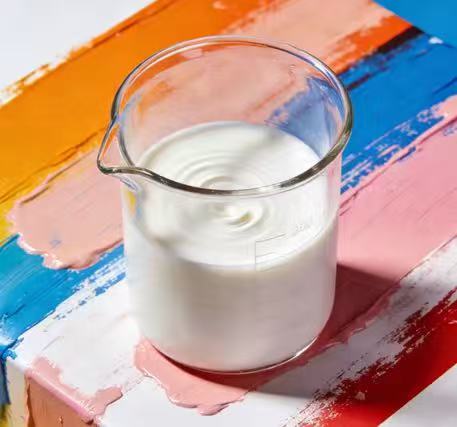
    絶えず進化する高分子化学の分野では、 水性アクリルエマルジョン アクリルは、数え切れないほどの業界で持続可能性と性能を再定義する基盤材料として浮上しました。分散に揮発性有機化合物(VOC)に依存する溶剤型アクリル系とは異なり、水性アクリルエマルジョンはアクリルポリマー粒子を水中に分散させることで、機能性を損なうことなく、低毒性で環境に優しい代替品を生み出します。この素材がなぜゲームチェンジャーとなり、その優れた点、そして世界中のメーカーにとって欠かせない存在となったのか、その詳細を掘り下げていきましょう。水性アクリルエマルジョンとは何ですか?水性アクリルエマルジョンは、本質的には、水性媒体中のアクリルポリマーのコロイド分散液です。このエマルジョンは界面活性剤と乳化剤によって安定化されており、ポリマー粒子の凝集を防ぎ、水中での均一な分散を保証します。製造工程では通常、エマルジョン重合が用いられます。これは、費用対効果が高く、拡張性に優れた方法であり、中程度の温度で重合するため、溶剤ベースの製造に比べてエネルギー消費量を削減できます。得られた製品は乳状の粘性液体で、モノマー比、粒子サイズ、架橋密度を調整することで、特定の性能ニーズに合わせて調整できます。柔らかく柔軟なエマルジョンから硬く高硬度の処方まで、水性アクリルエマルジョンは多様な用途要件に合わせて高度にカスタマイズ可能です。水性アクリルエマルジョンの主な用途1. 建築用塗料これは水性アクリルエマルジョンの最大の用途分野です。内外壁塗料、木材コーティング、石材コーティングの主要バインダーとして使用されています。屋外用アクリルエマルジョン塗料は、紫外線劣化、降雨、温度変化など、優れた耐候性を備えています。一方、屋内用塗料は、低臭性、速乾性、優れた洗浄性を備えています。また、顔料や添加剤との相性も良く、幅広い色と仕上がり(マット、サテン、グロス)を実現できます。2. 接着剤とシーラント水性アクリルエマルジョンは、テープ、ラベル、ステッカーなどの感圧接着剤(PSA)をはじめ、木材、紙、繊維などの構造用接着剤にも広く使用されています。強力な接着力と優れた柔軟性を備え、刷毛塗り、ローラー塗り、スプレー塗りなど、様々な方法で容易に塗布できます。シーラントでは、コンクリート、金属、プラスチックなどの基材への優れた接着力を発揮するとともに、わずかな動きにもひび割れなく追従できる弾力性も備えています。3工業用コーティング建築用途以外にも、水性アクリルエマルジョンは金属、プラスチック、コンクリートなどの基材(機械、自動車部品、床材など)の工業用コーティングに使用されています。耐腐食性、耐薬品性、耐久性に優れているだけでなく、VOC排出に関する厳しい環境規制も満たしています。                                        水性アクリルエマルジョンの優れた特徴1. 環境に優しく、VOCが少ない最大の利点は、VOC含有量の低さ(多くの場合50g/L未満、プレミアムグレードではVOCゼロ)です。これは、EU REACH規則、米国EPA基準などの世界的な環境規制に準拠しています。有害なVOCを大気中に放出する溶剤系システムとは異なり、水性アクリルエマルジョンは大気汚染を最小限に抑え、塗布および取り扱い中の作業者への健康リスクを軽減します。2. 多彩なパフォーマンスアクリルエマルジョンは、幅広い特性を実現するように配合できます。•耐候性: 優れた UV 安定性と耐加水分解性を備えているため、屋外での使用に最適です。•柔軟性と強靭性: ひび割れや剥がれがなく、衝撃、曲げ、熱膨張/収縮に耐えます。•接着性: ほぼすべての一般的な基材 (木材、金属、コンクリート、プラスチック、紙) に強力に接着します。•耐薬品性: 水、弱酸、アルカリ、洗剤に対して耐性があります。3. 簡単な塗布と取り扱い水性ベースであるため、アクリルエマルジョンは水で簡単に希釈でき(危険な溶剤は不要)、標準的な方法(刷毛塗り、ローラー塗り、スプレー塗り)で塗布できます。室温で速乾性があるため、製造業者の生産時間とエネルギーコストを削減できます。4. 費用対効果の高い生産と使用乳化重合は、他のポリマー合成方法と比較して低コストの製造プロセスです。さらに、水ベースの配合により、原材料コスト(水は有機溶媒よりも安価)と廃棄物処理コストを削減できます。5. 添加剤との適合性水性アクリルエマルジョンは、顔料、充填剤、可塑剤、その他の添加剤とよく混ざるため、配合者は性能を犠牲にすることなく、特定の最終用途の要件に合わせて製品をカスタマイズできます。結論水性アクリルエマルジョンは、溶剤系ポリマーの持続可能な代替品というだけでなく、建設、包装、繊維、接着剤など、数え切れないほどの産業を支える高性能素材です。環境に優しい特性、カスタマイズ可能な性能、そして優れたコスト効率は、メーカー、労働者、そして環境にとってWin-Winの関係を実現します。持続可能な素材への世界的な需要が高まる中、水性アクリルエマルジョンの重要性はますます高まっています。配合におけるイノベーション(例:耐久性を高める架橋アクリルエマルジョン、バイオベースアクリルモノマー)により、その可能性はさらに広がり、今後も多用途で先進的な選択肢であり続けるでしょう。配合者、メーカー、エンドユーザーを問わず、水性アクリルエマルジョンは、今日の性能目標と環境目標を満たす、信頼性が高く責任あるソリューションを提供します。このブログは、技術的な正確さと読みやすさのバランスを重視しており、業界の専門家、潜在的な顧客、そしてポリマー材料に関心のあるすべての方に適しています。トーンを調整したい場合(より専門的/よりカジュアル)、具体的な製品データを追加したい場合(例:粘度、Tg値)、特定の用途分野に焦点を当てたい場合(例:建築用コーティングのみ)は、お気軽にお知らせください。それに応じて修正いたします。
当社は国家ハイテク企業として、中国国内市場で人気のRHERIなどのブランドを所有しており、また、当社の高品質な製品は東南アジア、中東、南米、アフリカ、北米などの海外のお客様の信頼も獲得しています。
f LINKIDEN
ニュースを購読する
ぜひ読み進めて、最新情報を入手し、購読してください。そして、ご意見をお聞かせいただければ幸いです。

サイトマップ ブログ Xml プライバシーポリシー

著作権 @ Runshine New Materials(FoShan) Co.,Ltd. 無断転載を禁じます。 ネットワークサポート

伝言を残す

伝言を残す
弊社の製品にご興味があり、詳細を知りたい場合は、こちらにメッセージを残してください。できるだけ早く返信させていただきます。
提出する

ホーム

製品

ワッツアップ

接触

伝言を残す
伝言を残す
弊社の製品にご興味があり、詳細を知りたい場合は、こちらにメッセージを残してください。できるだけ早く返信いたします。
提出する